

Choosing the right dental provider for your child is one of those early parenting decisions that shapes years of oral health habits. The pediatric dentist vs. family dentist question comes down to training, environment, and what your child needs most right now. Both can care for kids, but they bring different skill sets to the chair.
Here’s what to know before you book that first visit.
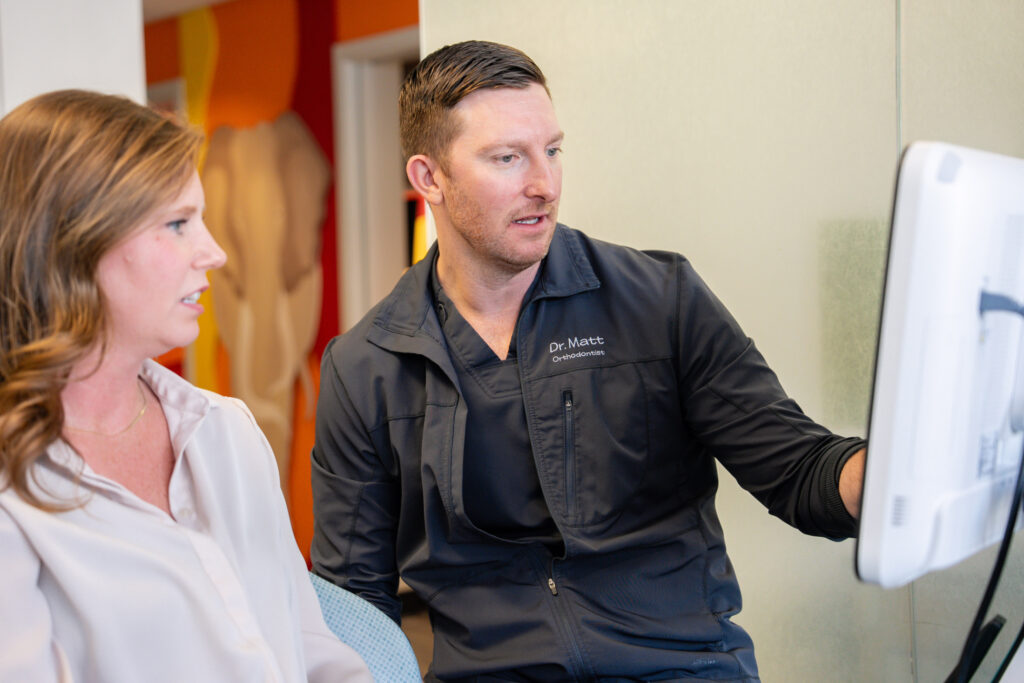
What Is a Pediatric Dentist vs. a Family Dentist?
A pediatric dentist completes dental school plus an additional 2 to 3 year specialty residency focused entirely on infants, kids, teens, and young patients with special health care needs. A family (general) dentist completes dental school and is licensed to treat families of all ages, but isn’t required to complete pediatric-specific residency training.
Both providers can legally care for kids. The real difference is the depth of child-focused training, the dental home environment, and the clinical tools built for smaller mouths.
Pediatric dentists can also earn board certification as a Diplomate of the American Board of Pediatric Dentistry, which involves written and clinical exams beyond residency. It’s a credential that signals ongoing commitment to kid-focused care.
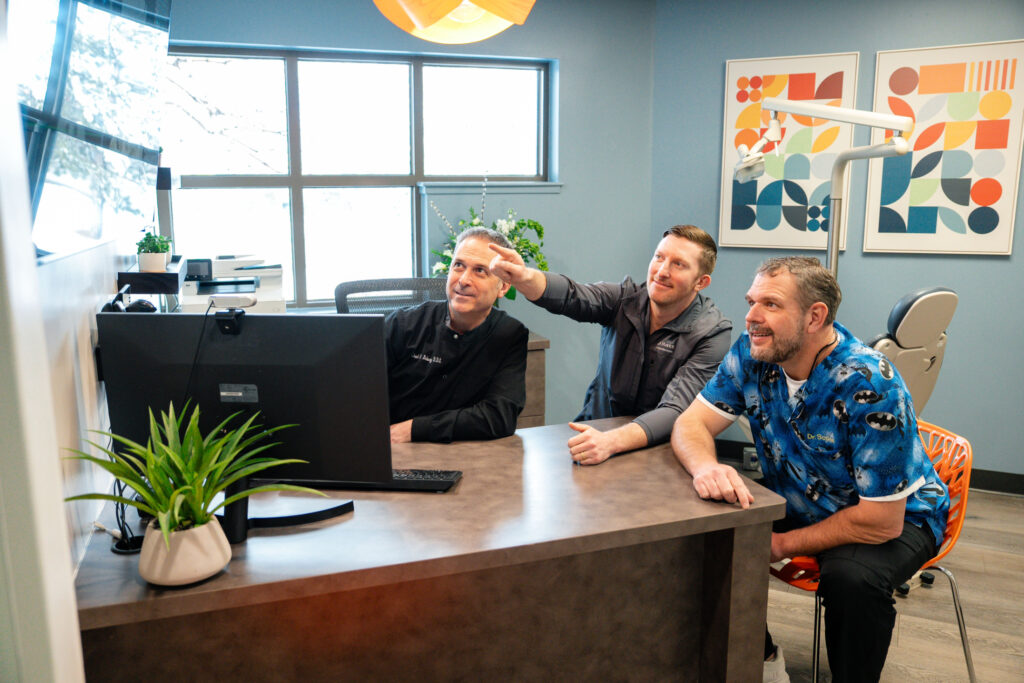
At Southwest Pediatric Dentistry & Orthodontics, families get the benefit of both worlds. Dr. Scott Pankratz leads our pediatric side, while Dr. Chad Belongea handles adult dentistry under the same roof. That means parents and kids can share one trusted dental home, with each age group seeing a provider trained specifically for their stage of life.
How Each Type of Dentist Approaches Your Child’s Care
The clinical day-to-day looks different in a pediatric neighborhood dental home compared to a general practice. Here’s how care typically unfolds for each.
Pediatric dentist approach:
- Uses behavior guidance techniques like tell-show-do, positive reinforcement, and age-appropriate language recommended by the American Academy of Pediatric Dentistry (AAPD)
- Works with child-sized instruments, smaller x-ray sensors, and distraction tools designed for little mouths and short attention spans
- Monitors mixed dentition, jaw growth, and eruption patterns at every visit, which matters most during the ages when permanent teeth are coming in
- Offers a broader sedation range when needed, including nitrous oxide, oral sedation, IV sedation, and hospital-based sleep dentistry for kids who need extensive work or have special needs
- Designs the dental home around play, bright themes, and sensory comfort to lower anxiety before treatment even starts
Family dentist approach:
- Often focuses on efficiency to keep families of all ages moving through the schedule
- May use adult-sized tools and standard workflows that work well for cooperative older kids but can feel overwhelming for toddlers
- Typically offers nitrous oxide as the main sedation option, with more complex sedation requiring a referral out
- Provides general oversight of development, though not always at the specialty level
Dr. Scott Pankratz and our team use AAPD-aligned behavior guidance at every visit, which helps even nervous kids feel safe, seen, and supported from the moment they walk in.
Benefits of Choosing a Pediatric Dentist (and When a Family Dentist Works)
Pediatric specialists bring real advantages for young kids, but family dentists have their own strengths. The right choice depends on your child’s age, temperament, and your family’s logistics.
Benefits of a pediatric dentist:
- Reduced dental anxiety. Child-focused communication and a kid-friendly dental home lower stress before the first instrument touches a tooth. Kids who feel calm at early visits tend to grow into teens and adults who don’t dread the dental chair.
- Early dental home. The AAPD recommends establishing a dental home by age 1, or within 6 months of the first tooth erupting. Pediatric specialists are trained to make that first visit productive and reassuring for both parent and baby.
- Developmental expertise. Residency training covers eruption patterns, bite development, oral trauma from falls and sports, and care for kids with autism, Down syndrome, cerebral palsy, and other special health care needs.
- Full sedation range. When a child needs more than nitrous, pediatric specialists can offer oral sedation, IV sedation, or hospital-based care without sending families to multiple providers.
- Prevention-first mindset. Pediatric training emphasizes sealants, fluoride varnish, diet counseling, and habit coaching (thumb-sucking, pacifiers) at the right developmental windows.
When a family dentist may work well:
- Scheduling convenience. One dental home for parents and older kids can simplify a busy family calendar.
- Simplified records. Consolidated recordkeeping across the household.
- Older, cooperative kids. Teens with no anxiety and straightforward preventive needs often do fine in a general practice setting.
At Southwest Pediatric Dentistry & Orthodontics, we’ve built our practice to give families the specialist experience for kids plus full-spectrum care for adults under one roof. It’s the convenience of a family model with the depth of pediatric training behind it.

Pediatric Dentist vs. Family Dentist: Side-by-Side Comparison
The quickest way to see the differences is in a direct comparison. Here’s how the two provider types stack up across the categories that matter most for parents.
| Category | Pediatric Dentist | Family (General) Dentist |
|---|---|---|
| Training | Dental school + 2 to 3 year pediatric residency | Dental school only |
| Family focus | Infants, kids, teens, young patients with special needs | All ages, from kids to seniors |
| Dental home environment | Child-themed, sensory-friendly, built for little bodies | General practice design for all ages |
| Instruments | Child-sized tools, smaller x-ray sensors | Typically adult-sized tools |
| Behavior guidance | AAPD-trained techniques (tell-show-do, positive reinforcement) | Varies by provider |
| Sedation options | Nitrous, oral, IV, hospital-based sleep dentistry | Typically nitrous oxide only; referrals for more |
| Special needs expertise | Extensive residency training | Varies by individual provider |
| Developmental monitoring | Deep focus on eruption, jaw growth, bite development | General oversight |
| Trauma response | Trained in pediatric dental trauma protocols | Case-by-case experience |
| Board certification option | Diplomate of the American Board of Pediatric Dentistry | General dental licensure |
The table makes the picture clearer. For routine cleanings on an older, calm child, either provider can do the job. For infants, anxious kids, kids with sensory needs, or complex treatment, the pediatric specialist is built for the work.
How to Decide Which Dentist Is Right for Your Child
Still not sure which direction to go? Use this checklist to match the provider to your child’s needs.
Choose a pediatric dentist if:
- Your child is under age 3, or this is their very first dental visit
- You have an infant with newly erupting teeth (AAPD recommends a first visit by age 1)
- Signs of dental anxiety are showing up, there’s been a bad experience in the past, or your child dreads the chair
- Autism, sensory sensitivities, ADHD, or special health care needs are part of your child’s story
- Sedation beyond nitrous may be needed for extensive work
- Dental trauma has already happened (knocked-out tooth, chipped tooth from a fall or sports)
- Complex restorative work is on the horizon (pulpotomies, pediatric crowns, space maintainers)
A family dentist may work if:
- Your child is older, cooperative, and has only routine preventive needs
- Scheduling the whole family in one visit is a top priority
- Your child has already built comfort with a general dentist and is thriving
Before you commit, do this:
- Visit both offices and ask for a quick tour
- Meet the team and watch how they interact with kids in the waiting area
- Ask the provider about their pediatric training and sedation options
- Trust your gut on whether your child feels comfortable
Frequently Asked Questions
Up to what age do pediatric dentists treat young patients?
Most pediatric dentists care for kids from infancy through age 18, and sometimes beyond for young adults with special health care needs. The exact age cutoff varies by practice. At Southwest Pediatric Dentistry & Orthodontics, Dr. Scott Pankratz and the team care for kids through their teen years, and families can transition to Dr. Chad Belongea on the adult side without changing dental homes.
Can a family dentist perform pulpotomies or pediatric crowns?
Some family dentists do perform pulpotomies (baby tooth root canals) and stainless steel crowns on kids. Pediatric dentists, though, complete these treatments daily during their 2 to 3 year residency and routinely afterward. For complex pediatric restorative work, a specialist’s experience often means a smoother visit and better long-term outcomes.
When should my child’s first dental visit be?
The American Academy of Pediatric Dentistry recommends a first visit by age 1, or within 6 months of the first tooth appearing. Early visits aren’t about extensive treatment, they’re about establishing a dental home, checking development, and giving parents guidance on brushing, feeding, and habits like pacifier use.
What if my child is extremely anxious at the dentist?
Pediatric specialists are trained in behavior guidance techniques designed to help anxious kids feel calm. The dental home environment, child-sized tools, and the provider’s communication style all make a measurable difference. When anxiety is severe, sedation options like nitrous oxide or oral sedation can help your child get the care they need without trauma.
Can my child see both a pediatric and family dentist?
Yes. Some families use a pediatric specialist for complex care or sedation while keeping routine cleanings at a family practice. Just make sure records are shared between offices so treatment stays coordinated and nothing falls through the cracks.
Deciding between a pediatric dentist and a family dentist really comes down to what your child needs right now, at their age and stage. For most young kids, especially those under 6 or anyone with anxiety or special needs, a pediatric specialist is the stronger fit. For older, confident kids, either can work well.
If you’re in Littleton or the surrounding area and want to meet our team, Southwest Pediatric Dentistry & Orthodontics offers pediatric care with Dr. Scott Pankratz and adult dentistry with Dr. Chad Belongea at our 6931 South Pierce Street location. Get started here or call (303) 978-1104 for pediatric visits, or (720) 974-2500 for adult care. We’d love to help your family find the right fit.